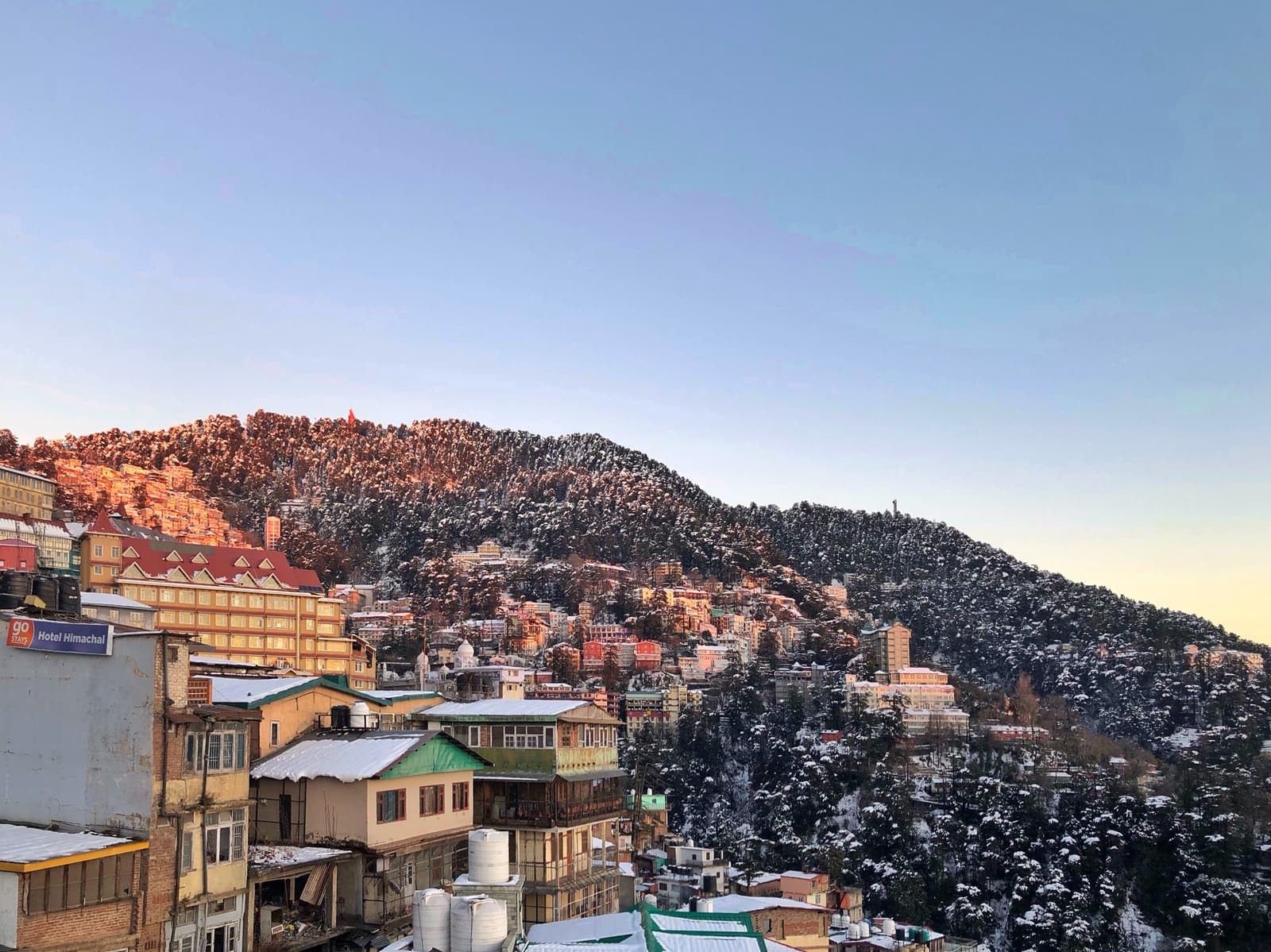
Shimla is the capital of Himachal Pradesh and, for most of the late 19th and early 20th centuries, it was the summer capital of British India. Today it is a busy state capital strung along a series of ridges, with a car-free colonial heart, excellent views and easy access to forest, orchards and snow. This guide covers how long to stay, what to see, what it costs and how to avoid the crowds.
A short history
Before the British arrived, these hills belonged to small hill states, and the ridge was a scattering of villages around a shrine to the goddess Shyamala, from whom the town is often said to take its name. After the Anglo-Gurkha war of 1814–16, British officers built the first cottages here, and in 1864 Simla was made the official summer capital of British India. For the next eight decades the government of the subcontinent moved up from the plains each spring. After independence Shimla served as the capital of Punjab until Chandigarh was built, and it became the capital of Himachal Pradesh.
How long do you need?
- One day — the Ridge, the Mall, Christ Church and Jakhoo, or a toy train and city tour.
- Two days — the town properly: add the Viceregal Lodge, the State Museum and a heritage walk.
- Three to four days — the version we recommend: add Kufri, Mashobra and Naldehra, or Chail.
- Five days or more — add a night in Narkanda, or continue into Kinnaur or to Manali.
What to see
 Shimla town
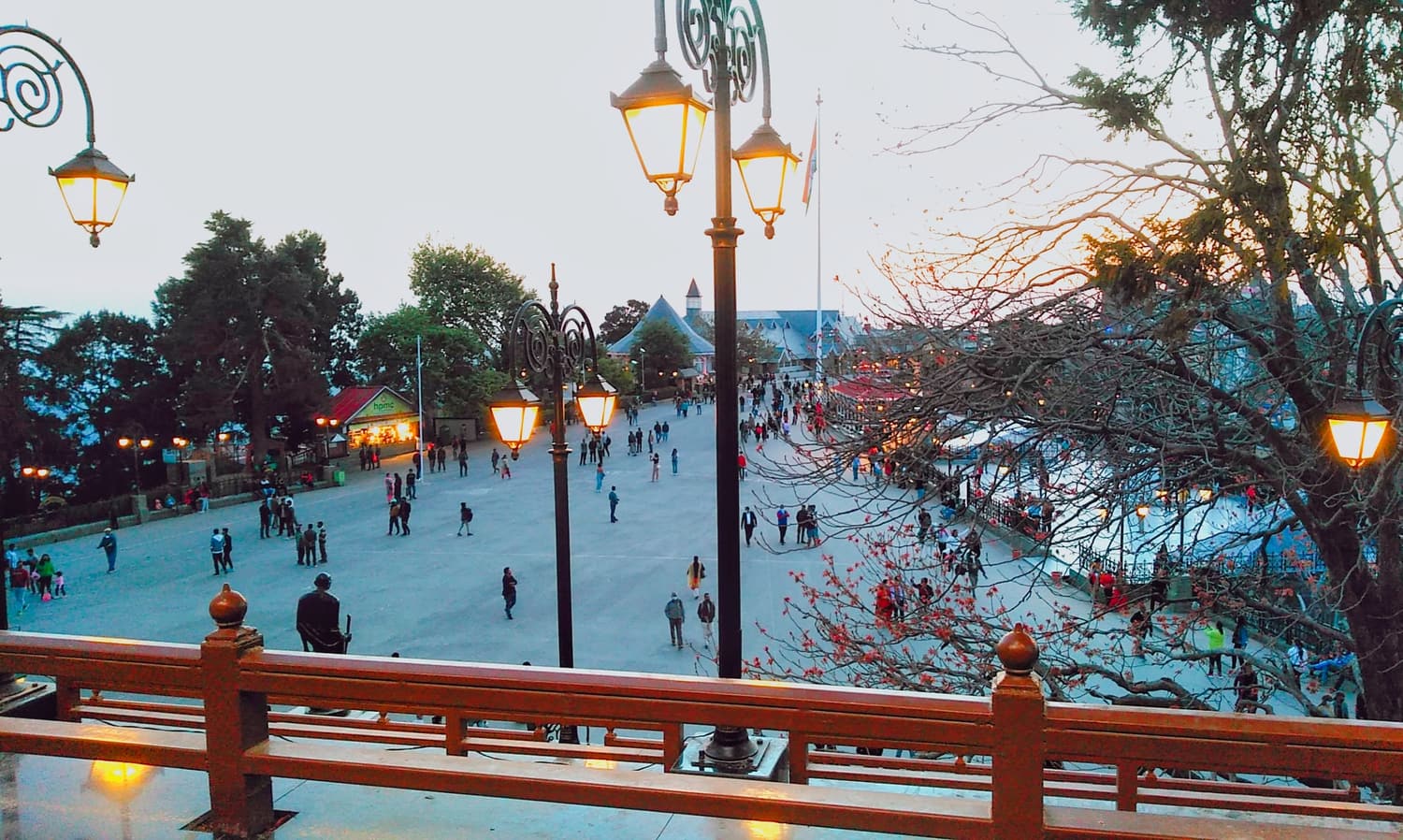
 The Ridge & Mall Road
The open-air living room of the Queen of the Hills
The wide, traffic-free promenade along the crest of the town and the shopping street that curves below it. Scandal Point, the Town Hall, the Gaiety Theatre, Lakkar Bazaar and the best mountain views in Shimla are all within a few minutes’ walk.
 Shimla town
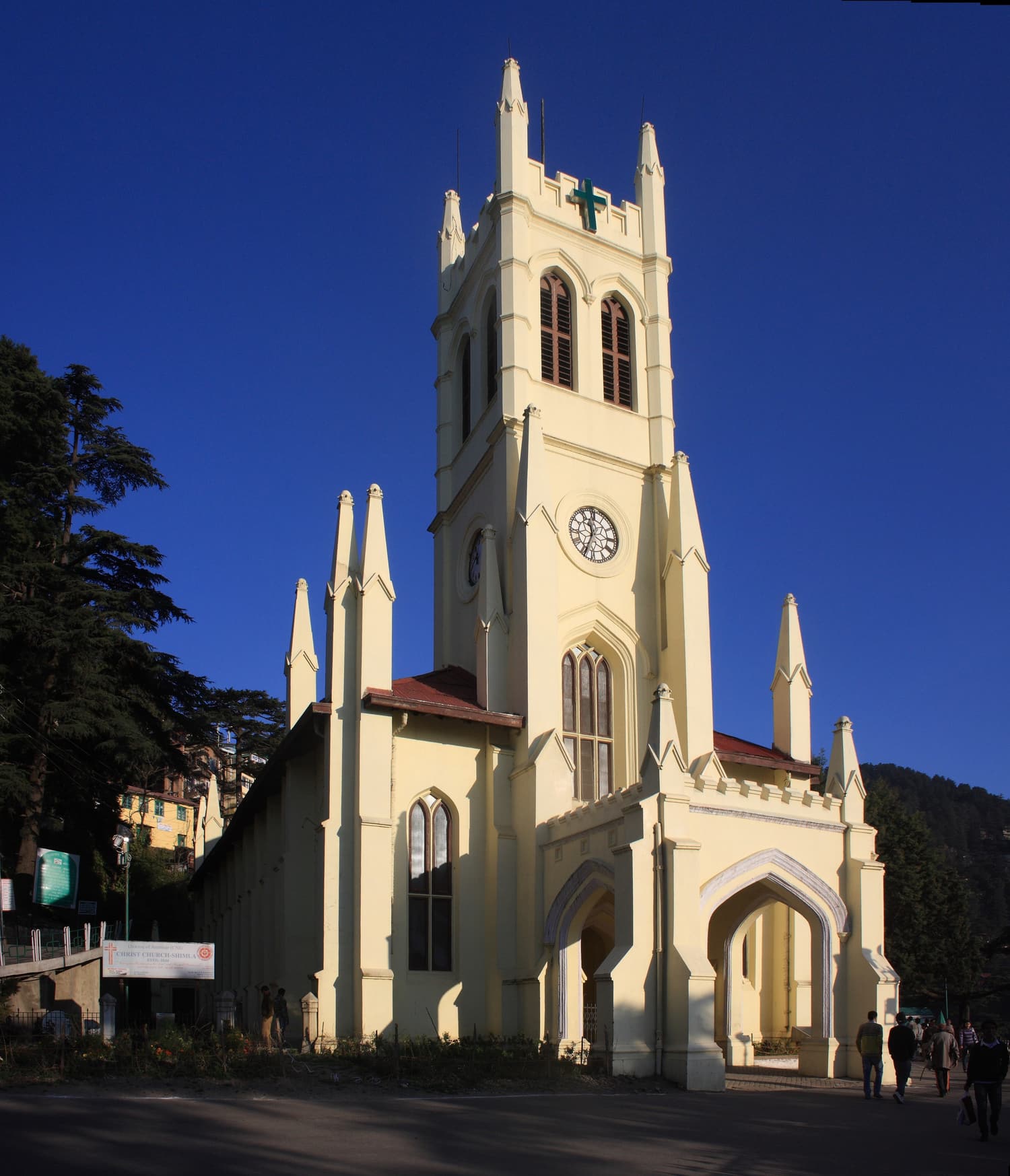
 Christ Church
The pale-yellow landmark on the Ridge
Completed in 1857, this neo-Gothic church is one of the oldest in northern India and the image everyone takes home from Shimla. Inside are fine stained-glass windows and brass memorials from the days of the Raj.
 Shimla town
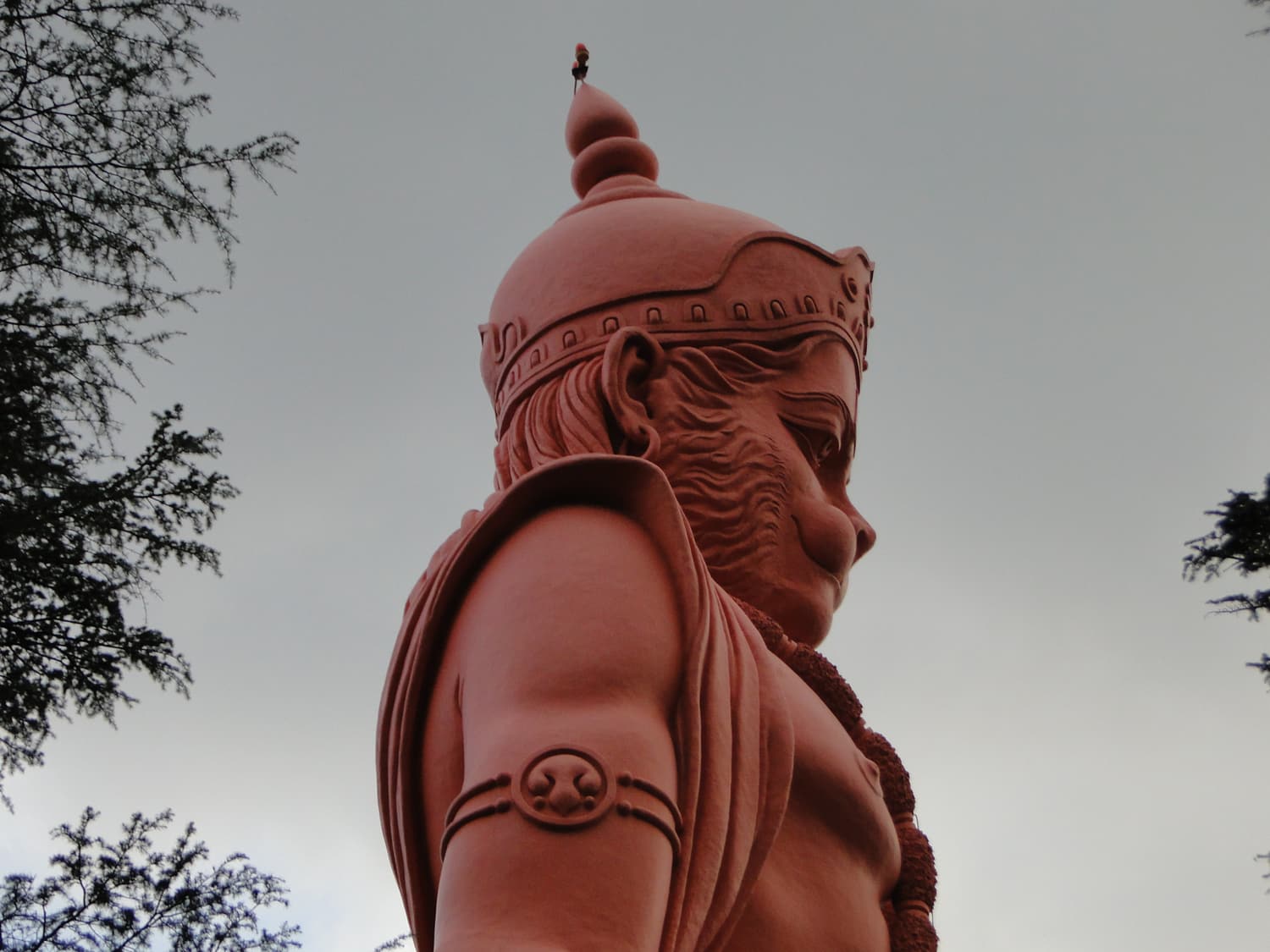
 Jakhoo Temple
Hanuman’s hilltop, the highest point in town
An ancient Hanuman temple on the summit of Jakhoo Hill, around 2,450 m up, crowned since 2010 by a giant orange statue of the monkey god visible across Shimla. Walk up through the deodars or ride the ropeway — and mind the monkeys.
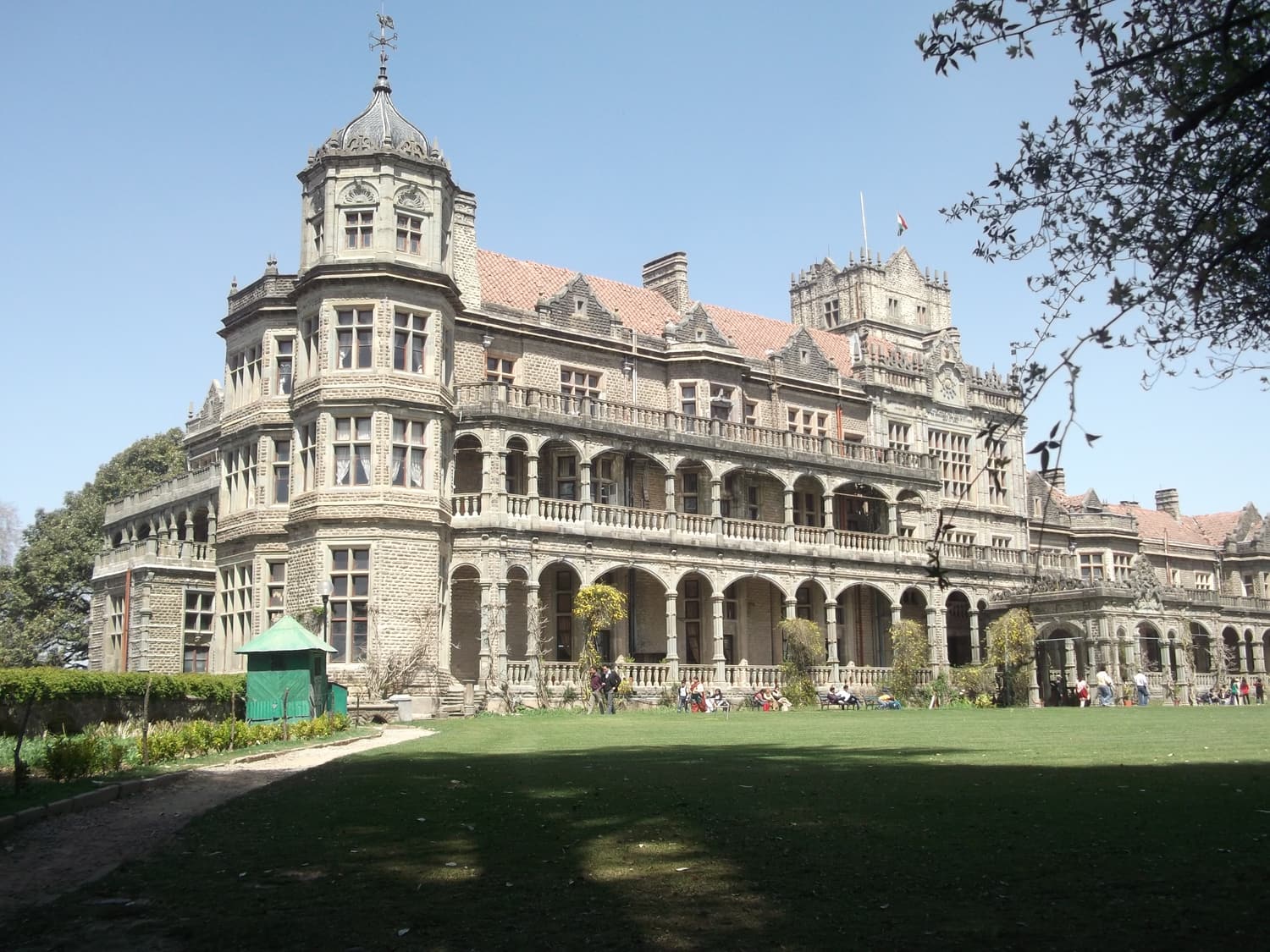 Shimla town
 Viceregal Lodge
Where the Raj governed India each summer
The grey-stone Jacobethan mansion built in 1888 for the Viceroys of India, scene of the 1945 Simla Conference and now the Indian Institute of Advanced Study. Guided tours show the teak-panelled halls, and the lawns look out over the mountains.
See all sixteen, with directions and tours, in our things to see guide.
Sample itineraries
- Day 1 — The Ridge and the Mall: arrive, check in, then a guided heritage walk at sunset: Scandal Point, Christ Church, the Gaiety and Lakkar Bazaar.
- Day 2 — Jakhoo and the Viceregal Lodge: climb or ride up to Jakhoo early, then head west to the State Museum and the Viceregal Lodge for the afternoon.
- Day 3 — Into the hills: Kufri and Fagu for snow and views, or Mashobra and Naldehra for forest and orchards; Tattapani in winter.
- Day 4 — Chail or the toy train: a day at Chail, or ride the toy train down to Barog and back.
What it costs
Shimla is more expensive than the plains, especially in peak season, but still good value. Typical costs:
| Item | Typical price |
|---|---|
| Christ Church, Jakhoo Temple | Free (donations welcome) |
| Viceregal Lodge guided tour | A modest ticket; higher for foreign visitors — check at the gate |
| Public lift, Cart Road to the Mall | A small fee per ride |
| Toy train, Kalka–Shimla | Low to moderate, depending on train and class |
| Himachali thali or dham in a local restaurant | Inexpensive — a few hundred rupees |
| Taxi for a day trip to Kufri or Chail | Agree the fare with the taxi stand; rates are often fixed by the union |
| Guided heritage walk | From about US$14 via GetYourGuide |
Hotel prices vary enormously with the season: summer weekends and the Christmas–New Year week cost far more than a midweek night in the monsoon.
What to eat
Most restaurants on the Mall serve North Indian, Punjabi and Chinese-style dishes, but it is worth seeking out Himachali food: siddu (steamed wheat buns stuffed with poppy seed or walnut paste, eaten with ghee), chha gosht (lamb in a yoghurt gravy), madra (chickpeas or beans cooked in yoghurt) and the dham, a festive meal of rice, lentils and curries served on leaf plates. The Indian Coffee House on the Mall, run by a workers’ cooperative, is a Shimla institution for coffee and South Indian snacks.
A home food experience or street-food crawl is the easiest way to taste local cooking.
Where to stay
- Near the Mall — heritage hotels and mid-range stays within walking distance of everything; noisy in peak season, but unbeatable for atmosphere.
- Out of town — forest resorts at Mashobra, Kufri, Naldehra and Theog, with views and quiet, but you will need a car.
We compare the best of each on our where to stay page.
Practical details
- Money: Indian rupee (₹). UPI mobile payments are everywhere; cards work in hotels and larger shops. ATMs cluster on the Mall and Cart Road.
- Language: Hindi and the local Pahari dialects; English is widely spoken in hotels and shops, and Punjabi is commonly understood.
- Safety: Shimla is generally safe and relaxed. The main hazards are traffic on the narrow roads, slippery steps in rain or ice, and the monkeys.
- Monkeys: rhesus macaques and langurs live all over town, especially on Jakhoo. Keep food out of sight, glasses and phones secured, and never feed them.
- Monsoon: from July to September landslides can block roads and the railway. Build in spare time and follow local advice.
- What to pack: layers in every season (evenings are cool even in June), a warm jacket, gloves and hat in winter, comfortable walking shoes with grip, rain gear in the monsoon and sunscreen at altitude.
- Rules: polythene bags are banned in Himachal Pradesh; smoking and littering in public places attract fines.
Common mistakes
- Arriving on a Friday evening in June without a hotel booking.
- Driving up to the Mall — you can’t; plan where you will park.
- Expecting guaranteed snow at Christmas. It usually comes later, if at all, in town.
- Carrying snacks openly on the way to Jakhoo.
- Seeing only the Mall. The forests, the Viceregal Lodge and the villages around town are the real Shimla.