Shimla has a mild mountain climate with four clear seasons: a pleasant spring and summer (March–June), a wet monsoon (July–September), a clear, crisp autumn (October–November) and a cold winter (December–February) with occasional snow. There is no bad time to visit, but each season suits a different trip.
Shimla month by month
| Month | Typical day / night | Rain / snow | Verdict |
|---|---|---|---|
| January | 9 / 2 °C | Chance of snow | Cold; best chance of snow; Winter Carnival around New Year |
| February | 11 / 3 °C | Chance of snow | Cold; snow possible, especially early |
| March | 15 / 6 °C | Some | Good; rhododendrons and fewer crowds |
| April | 19 / 10 °C | Little | Excellent; spring blossom |
| May | 23 / 14 °C | Little | Peak season — pleasant but crowded |
| June | 24 / 16 °C | Pre-monsoon showers | Busy until the rains arrive; Summer Festival |
| July | 21 / 15 °C | Heavy | Monsoon; landslide risk |
| August | 20 / 15 °C | Heavy | Wettest month; misty forests |
| September | 20 / 13 °C | Moderate | Rain easing; green and quiet |
| October | 18 / 10 °C | Little | Excellent; clearest views; Dussehra |
| November | 15 / 6 °C | Very little | Crisp and clear; quiet |
| December | 11 / 3 °C | Snow possible late | Cold; festive crowds around Christmas |
Temperatures are typical averages for the town and vary year to year; Kufri and Narkanda are several degrees colder.
Spring and summer: March to June
Days are sunny and pleasant, the rhododendrons bloom red in March and April, and the air is fresh while the plains swelter. This is Shimla’s peak season, with the biggest crowds from mid-May to late June, when families escape the heat of Delhi, Punjab and beyond. Book hotels early, avoid weekends if you can, and expect traffic on the roads up. The Summer Festival is usually held on the Ridge in late May or June.
Monsoon: July to September
The monsoon brings heavy rain, especially in July and August. The forests are lush and misty, hotels are cheaper and crowds thin out, but landslides can block roads and interrupt the toy train, and views of the high peaks are rare. If you travel now, allow spare days, follow weather warnings and avoid long mountain drives after heavy rain.
Autumn: October and November — the connoisseur’s choice
After the rains the air is washed clean and the snow ranges are clearest. Days are sunny and cool, nights cold, and the crowds are much smaller except around Dussehra and Diwali. It is the best time for walking, views and photography.
Winter: December to February — and the snow question
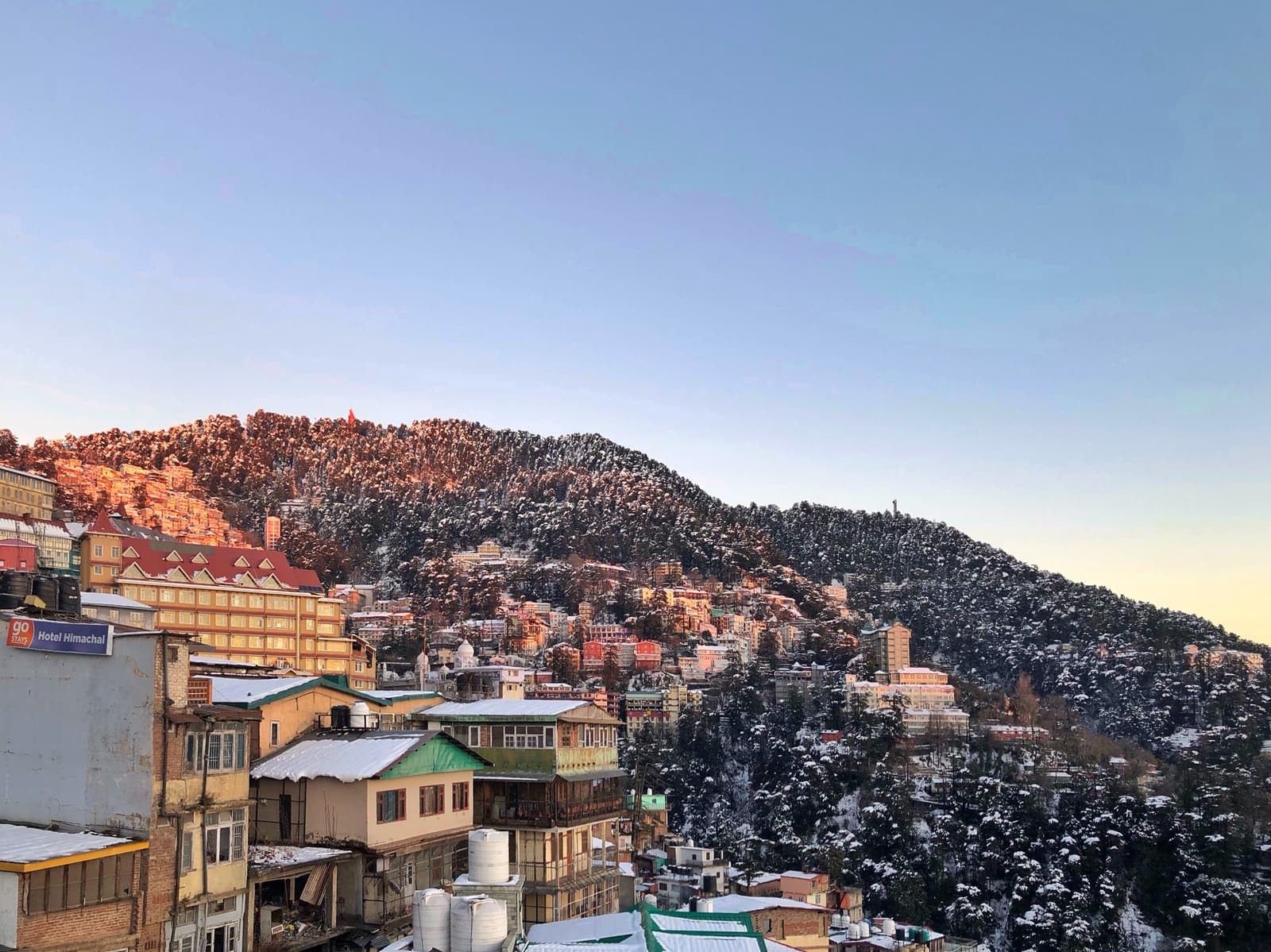
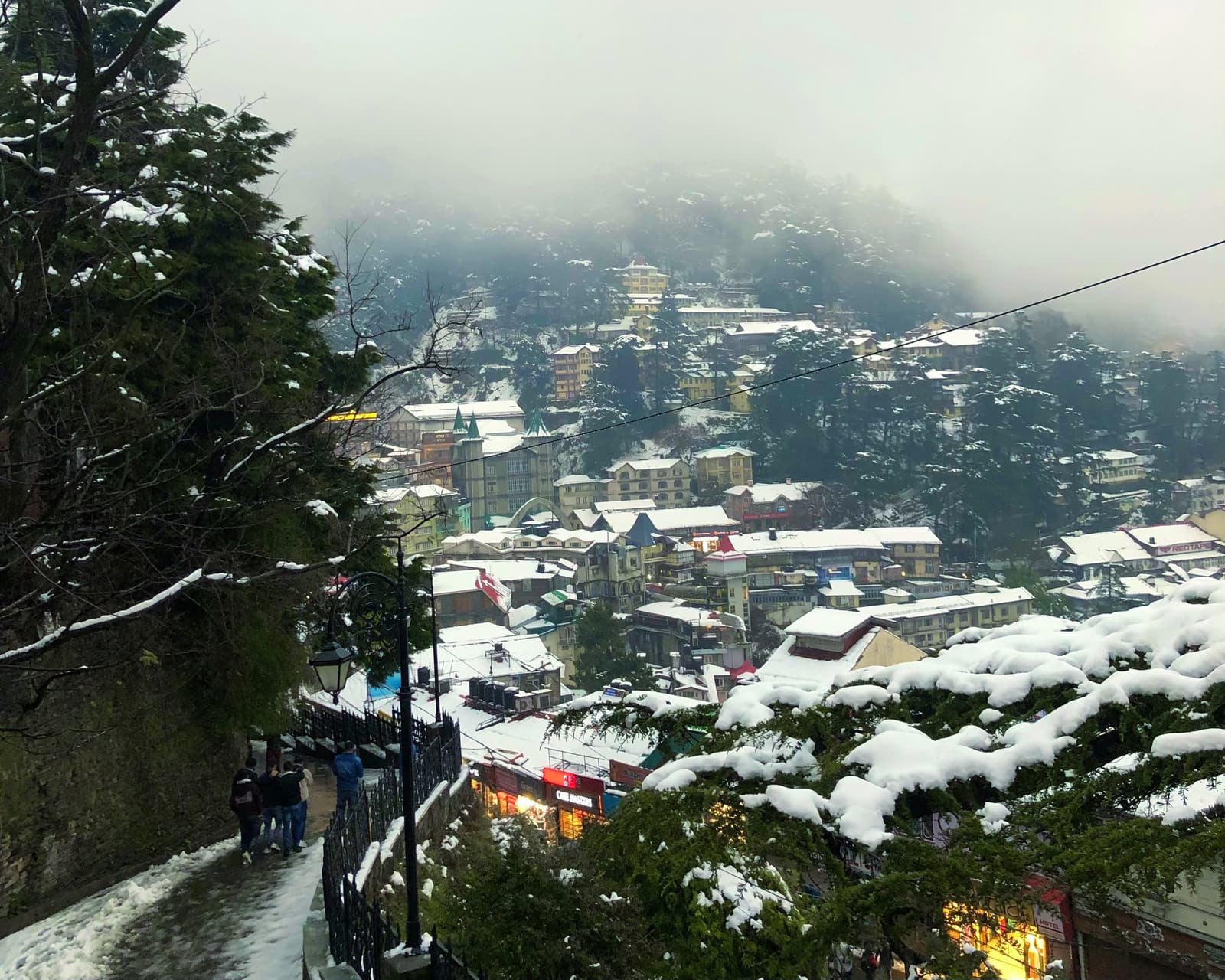
Winter is cold, with nights close to freezing. Snow in Shimla town usually falls, if it does, between late December and February — a white Christmas is possible but not common. Kufri, Fagu and Narkanda, higher up, get snow more reliably, and Narkanda’s slopes are used for beginner skiing in good years. Heavy snow can close roads beyond Shimla for a day or more. Christmas and New Year bring big crowds and a Winter Carnival on the Ridge; January and February are quieter.
When to be careful
- Peak weekends in May–June and at New Year. Hotels are full and traffic jams stretch for hours.
- Heavy monsoon rain. Landslides and road closures — follow local advice.
- After heavy snowfall. Icy roads and paths; check whether roads to Kufri and Narkanda are open.
Festival calendar at a glance
- Late December–early January: Christmas at Christ Church and the Winter Carnival on the Ridge.
- Mid-January: Makar Sankranti fair at Tattapani.
- May–June: Summer Festival on the Ridge.
- September–October: Navratri at Tara Devi and other temples; Dussehra.
- October–November: Diwali; the Lavi trade fair at Rampur on the road to Kinnaur (November).
Festival dates move from year to year — check before you plan.