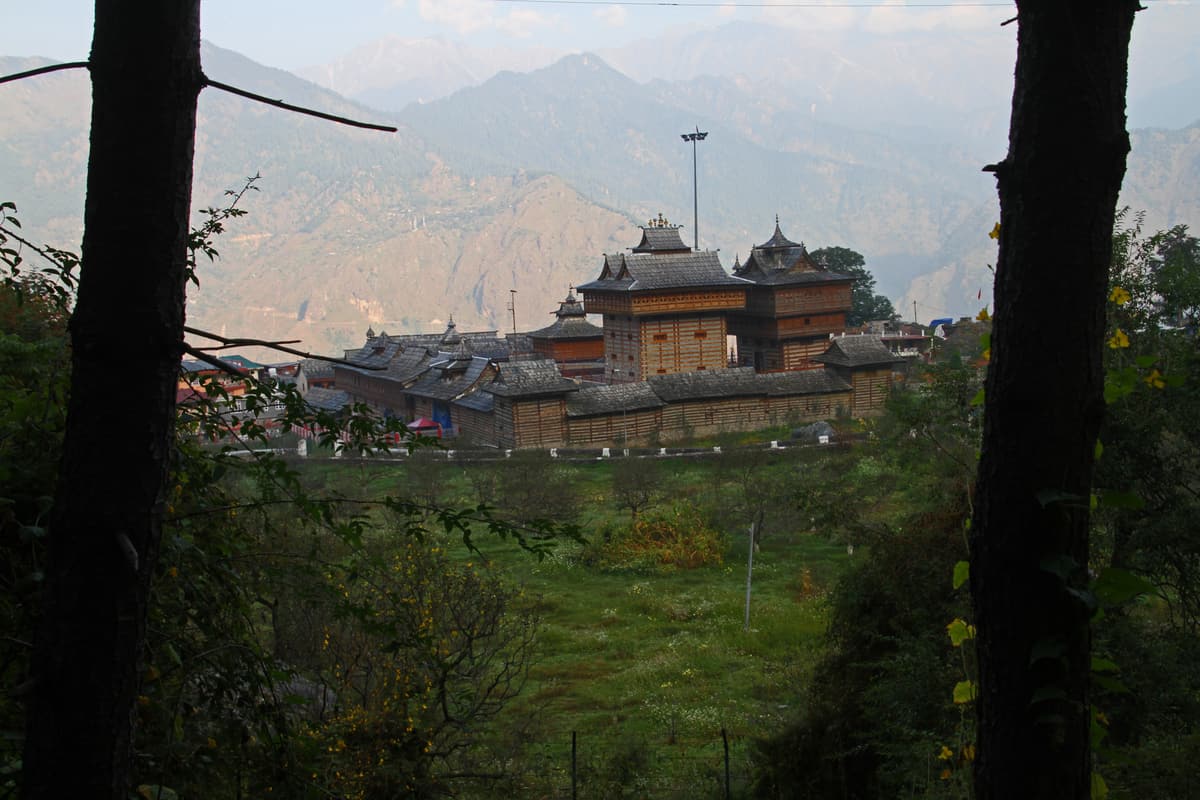
East of Narkanda the highway drops to the Sutlej at Rampur and follows the river into Kinnaur, a district of apple orchards, carved-wood temples and dizzying gorges. Sarahan, with its extraordinary Bhimakali temple, Sangla and Chitkul in the Baspa valley, and Kalpa, facing the Kinnaur Kailash range, are the classic stops.
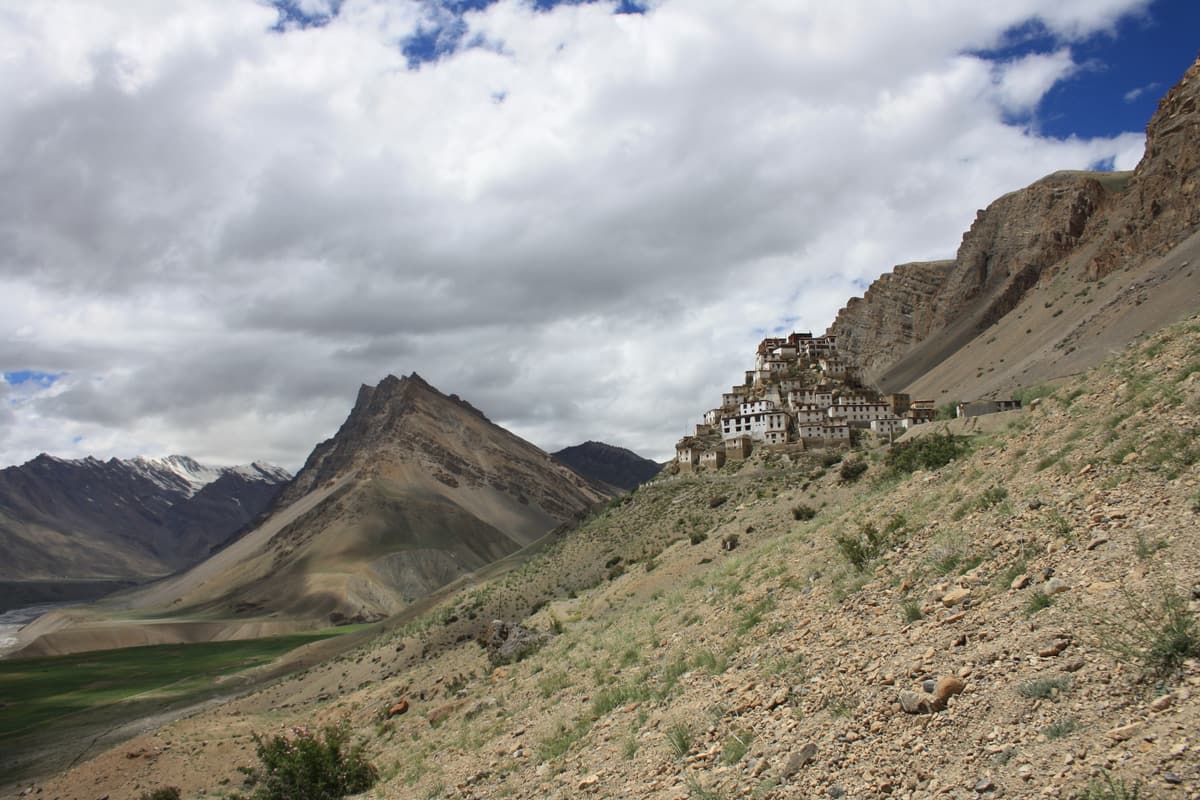
Beyond Kinnaur the road climbs into Spiti, a high-altitude desert of Buddhist villages and monasteries — Tabo, founded in 996, the clifftop Key Monastery above Kaza, and villages such as Langza and Komic. Many travellers loop back to Manali over the Kunzum pass when it is open.
Top things to do at Kinnaur & Spiti
Sarahan’s Bhimakali Temple
The former summer seat of the Rampur Bushahr rulers, with a temple complex of layered stone and timber — one of the finest examples of Himachali architecture.
Kalpa and the Kinnaur Kailash
Watch the sun rise on the Kinnaur Kailash peaks from Kalpa, above Reckong Peo. Chitkul, at the end of the Baspa valley, is one of the last villages before the Tibetan border.
The monasteries of Spiti
Tabo’s thousand-year-old murals and Key’s hilltop gompa are highlights of any trip. A guided Kinnaur and Spiti tour takes care of the logistics.
How to get to Kinnaur & Spiti
- By road: Shimla to Kalpa is roughly 230 km, 8–10 hours; Kaza is a further long day. Most travellers take 7–10 days for the loop.
- By bus: HRTC buses run from Shimla to Reckong Peo and beyond, but they are slow and long.
Insider tips
- The best season is from about May to October. In winter parts of the route are cut off, and the Kunzum pass to Manali is closed for much of the year.
- Foreign nationals need a protected-area permit for the stretch near the border between Kinnaur and Spiti; it can be arranged in Shimla, Reckong Peo or Kaza. Check current rules.
- Landslides are common, especially in the monsoon. Build buffer days into your plans.
- Acclimatise gradually — Kaza is at about 3,800 metres.
Best tours & tickets for Kinnaur & Spiti
These experiences are the easiest way to see Kinnaur & Spiti with a guide and transport sorted:
 Multi-day adventure tour from US$660
 From Delhi: 9-Day Kinnaur and Spiti Valley Tour with Meals
The great road journey that starts where most Shimla visits end: east along the Sutlej through Kinnaur’s apple villages and up into the moonscape of Spiti. Meals included; best from late spring to early autumn.
- The Hindustan–Tibet road beyond Shimla and Narkanda
- Sangla, Chitkul, Kalpa and the high desert of Spiti
- Ancient monasteries and remote Himalayan villages
Multi-day adventure tour from US$782 Shimla: 8-Day Spiti Valley Tour via Kalpa, Kaza & Manali
The full Spiti circuit: in through Kinnaur from Shimla, out over the passes to Manali, with the great monasteries of Tabo and Key in between. Summer season only, when the high passes are open.
- Sarahan, Sangla and Kalpa in Kinnaur
- Tabo, Kaza and Key Monastery in Spiti
- Out over the high passes to Manali